
https://www.sanaoequipment.com/wire-cutting-stripping-machine/
In electrical manufacturing, automotive wiring harness production, and electronic component assembly, wire stripping machines are essential. They automate insulation removal from wires, boosting efficiency and ensuring product consistency. Electric and pneumatic models are the most widely used for their stability and ease of operation. This article focuses on their working principles, structures, applications, and advantages to help you choose the right equipment.
A wire stripping machine removes the protective insulation layer (plastic, rubber, or PVC) from wires, exposing the conductive metal core without damage. Manual stripping is time-consuming, error-prone, and risks conductor damage. Electric and pneumatic machines solve these issues, ideal for high-volume, high-precision production.

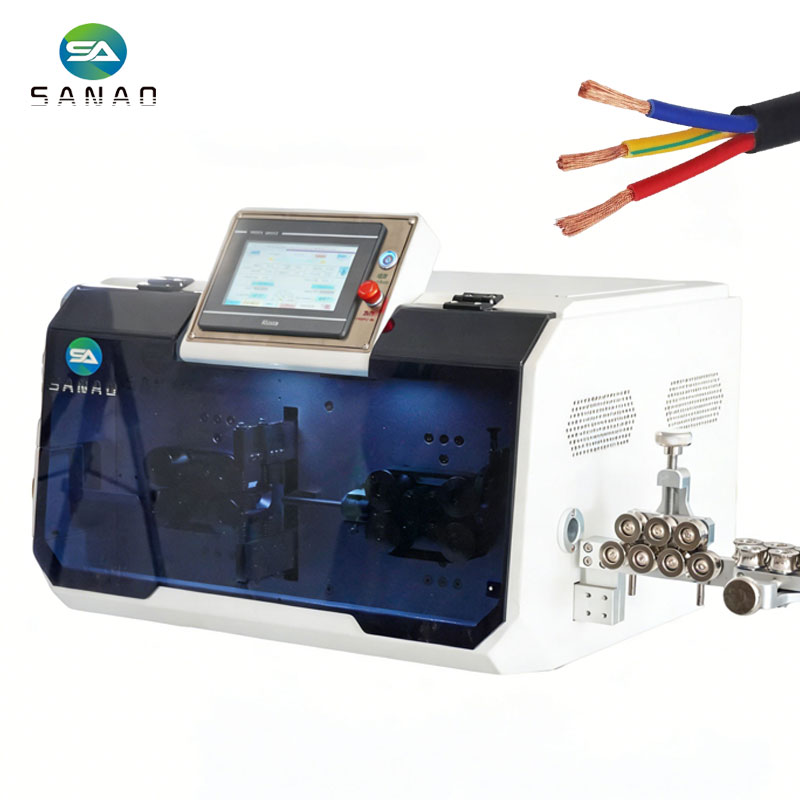
Basic Structure of Electric and Pneumatic Wire Stripping Machines
Both types share similar basic structures: feeding, cutting, stripping, control, and discharge mechanisms, working together for smooth operation.
1. Feeding Mechanism: Transports wires accurately via feed rollers, guide sleeves, and a driver. Electric models use motor-driven rollers; pneumatic models use air cylinders. Guide sleeves ensure wire alignment to avoid uneven stripping.
2. Cutting Mechanism: Uses high-hardness blades to cut insulation without damaging the conductor. Electric models drive blades via motors; pneumatic models use air pressure. Blade distance adjusts for different wire sizes.
3. Stripping Mechanism: Grips and pulls cut insulation off the conductor. Electric models use motor-driven grippers; pneumatic models use air cylinders. A reset component prepares for the next cycle.
4. Control System: Coordinates all mechanisms with a control panel, PLC controller, and sensors. Parameters like stripping length and cutting depth are adjustable, with advanced models featuring touch screens.
5. Discharge Mechanism: Ejects stripped wires via a channel and guide plate, facilitating subsequent processing.
Working Principle of Electric Wire Stripping Machines
Powered by an electric motor, these machines complete stripping in four steps, suitable for small to medium-volume processing.
Step 1: Feeding and Positioning. Set parameters, insert wire, and motor-driven rollers feed it to the preset length, with sensors triggering a stop.
Step 2: Insulation Cutting. Blades close to cut insulation without damaging the conductor, with adjustable depth for different wires.
Step 3: Insulation Stripping. Grippers clamp the insulation, and the motor pulls it off to expose the metal core.
Step 4: Discharge and Reset. The wire is ejected, and components reset for the next cycle. Electric models handle 0.1-20mm wires, ideal for small workshops and electronic factories.
Working Principle of Pneumatic Wire Stripping Machines
Powered by compressed air, these machines offer faster speed and larger pulling force, suitable for high-volume, heavy-duty processing.
Their process mirrors electric models but uses air cylinders. Step 1: Air-driven rollers feed and position the wire. Step 2: Cylinders actuate blades to cut insulation. Step 3: Grippers pull insulation off with adjustable air pressure. Step 4: The wire is ejected, and cylinders reset. They process 50-200 wires per minute, handle up to 50mm thick cables, and are used in automotive and large-scale production.
Key Differences Between the Two Types
1. Power Source: Electric (power supply); Pneumatic (compressed air + air compressor).
2. Speed: Pneumatic (0.3-1s/cycle); Electric (1-3s/cycle).
3. Pulling Force: Pneumatic (larger, for thick cables); Electric (limited, for thin wires).
4. Maintenance: Electric (low cost, check motor/blades); Pneumatic (higher cost, maintain air system).
5. Application: Electric (small workshops); Pneumatic (large production lines).
Advantages of Both Machines
Compared to manual stripping, they offer higher efficiency (replace 5-10 workers), stable quality, strong adaptability, safety, and long-term cost savings (5-10 year service life).
Application Scenarios
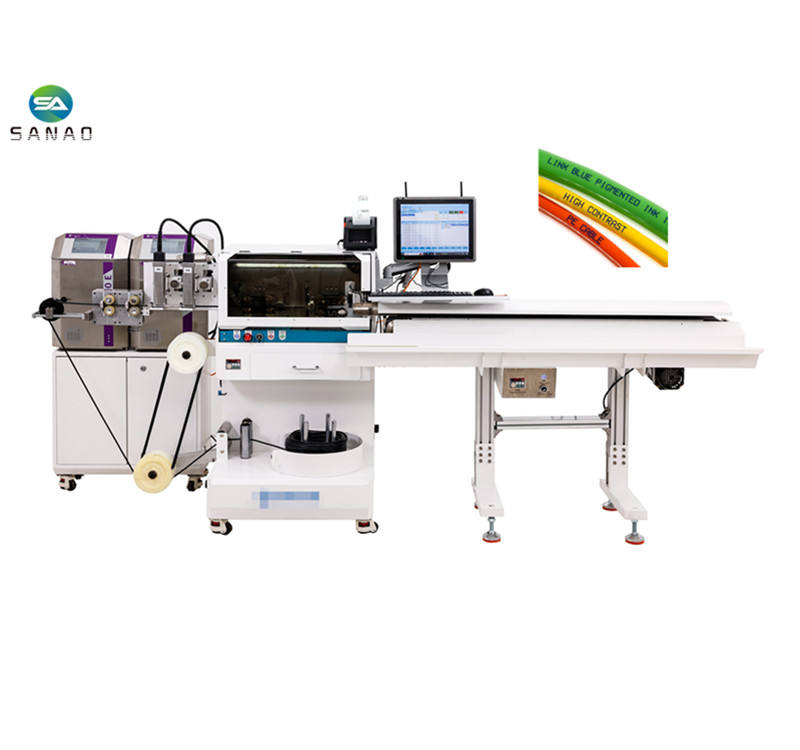
1. Automotive: Pneumatic for wiring harnesses; Electric for small electronic wires.
2. Electronic Components: Electric for high-precision thin wires.
3. Electrical Equipment: Both types, based on wire gauge.
4. Wiring Harness Plants: Main users, processing large volumes of wires efficiently.
Post time: Apr-10-2026